#Not-For-Profit #Policy #CommunityEngagement
Web content for a community-led change initiative.
The client.
The City for All Women Initiative (CAWI) is a grassroots organisation working to advance equity and inclusion in Canada’s capital city and beyond. Using an intersectional feminist lens, CAWI pursues its mission through training, capacity building, civic engagement and advocacy.
A key focus of CAWI’s work is their Caring Cities initiative, which will shape the organisation’s direction over the coming years. The initiative promotes a vision of cities designed around care — where people’s everyday needs, relationships and well-being are prioritised in planning, policy and services.
The challenge.
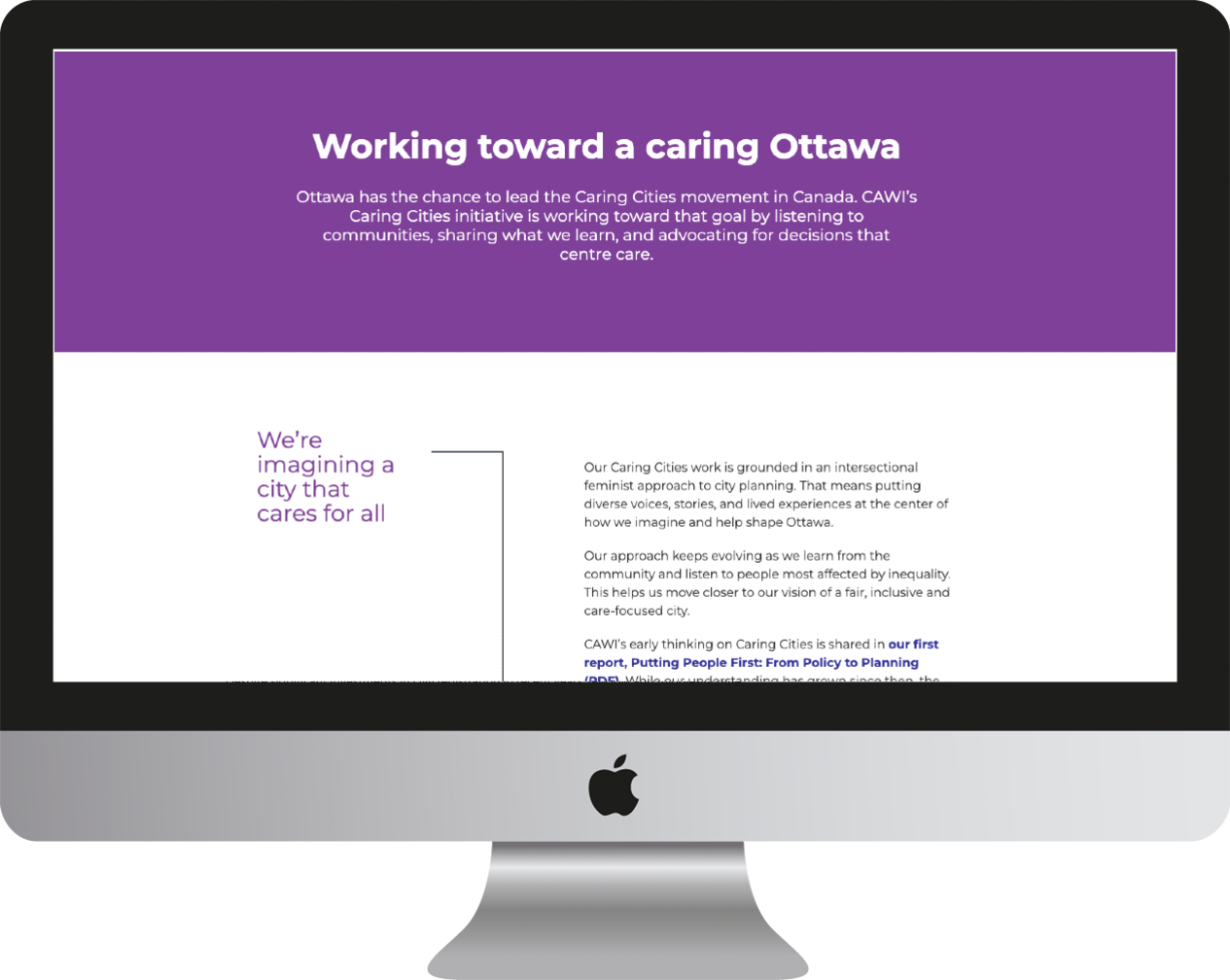
CAWI wanted to create a new section of their website to educate local communities on the concept of caring cities and the practice of creating them.
The organisation had a strong foundation of research and policy recommendations set out in detailed papers. However, these were aimed at specialists like policy makers and city planners.
CAWI needed to translate this work into clear, engaging web content for a wider audience — in particular, local residents and community leaders. They wanted this addition to their website to inspire people to get involved, support real-world conversations, and turn research into practical action.
My role.
I led content strategy and copywriting for the new section, working closely with the CAWI team and a web developer.
I transformed CAWI’s research papers, policy recommendations team insights into a set of connected web pages — shaping the structure, user flows and wireframes. I identified key messages, defined clear language to communicate important concepts, and wrote the copy for the section’s main pages.
My approach.
I worked closely with the team to understand their audiences and the intent behind their research, then focused on turning complex ideas into content that felt clear, relevant and actionable. A big part of this was pressure-testing the content from a user perspective — continually asking “so what?” to get to the messages that would resonate most, and using these to lead each page.
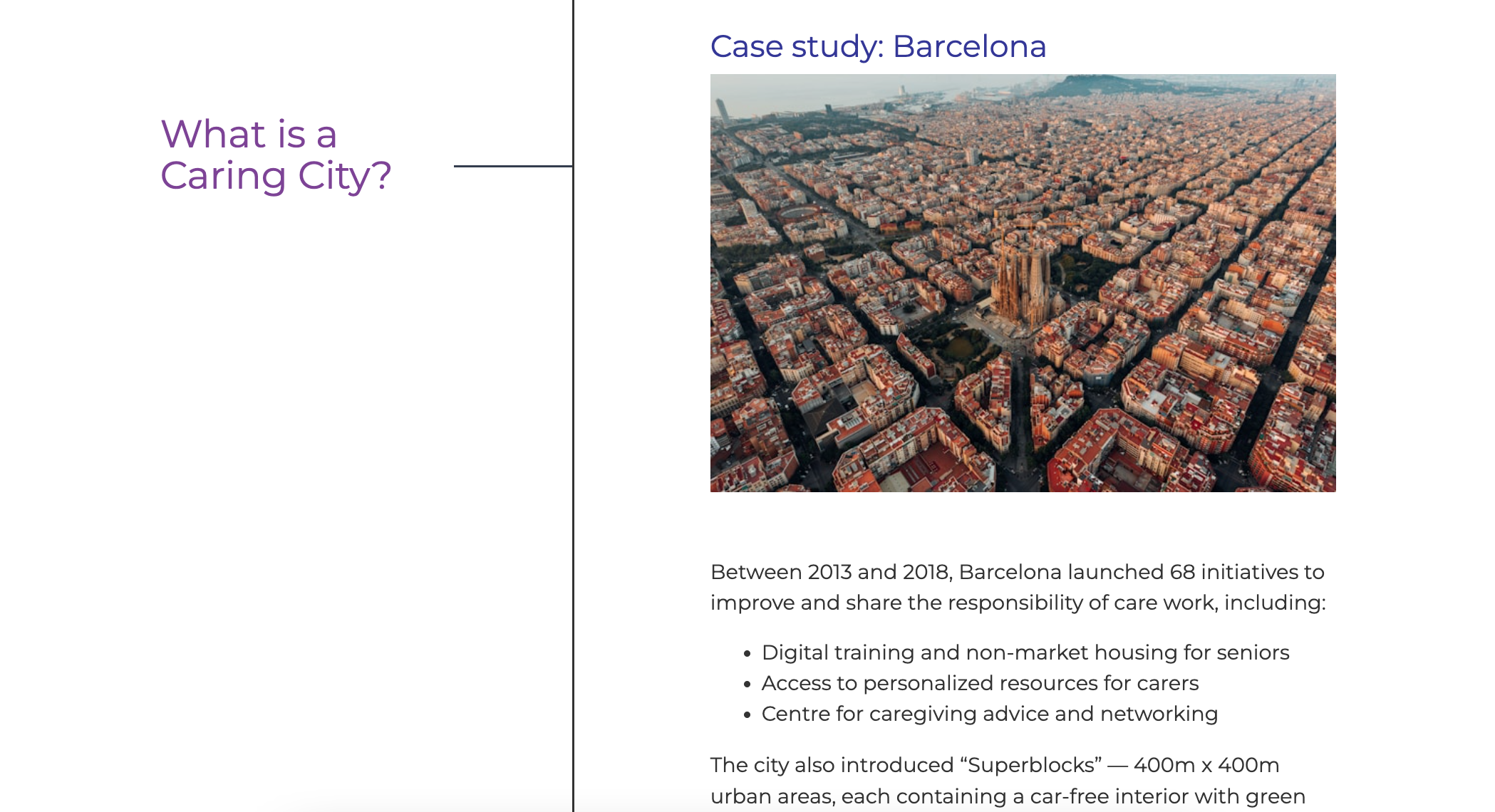
I also brought abstract concepts to life through concrete examples and storytelling, using real-world case studies and practical scenarios to make the idea of a “caring city” more tangible and relatable.
In terms of structure, I designed clear, guided journeys through the content, supported by simple but effective interactive elements. Working with the developer, we introduced a scroll-based flow that ties the content together and encourages users to keep reading without overwhelming them.
The tone balances clarity with warmth and optimism. I used inclusive, human language to create a sense of shared purpose — for example, framing ideas around “our city” and using relatable examples of care in everyday life — while grounding key messages in research to maintain credibility.
The result.
The new section was delivered with minimal revisions and launched successfully. It is now used as a core resource to support CAWI’s work, helping them communicate their approach, engage communities, and support conversations with stakeholders and decision-makers.